Agriculture as a Connected Community
Nov 4, 2026
Carlos Faria
Strategist
Supply Chain
The problem in agriculture is not always production. Many losses are failures of coordination, not effort. What changes when information flows back from consumers to farmers, and businesses make better decisions together?
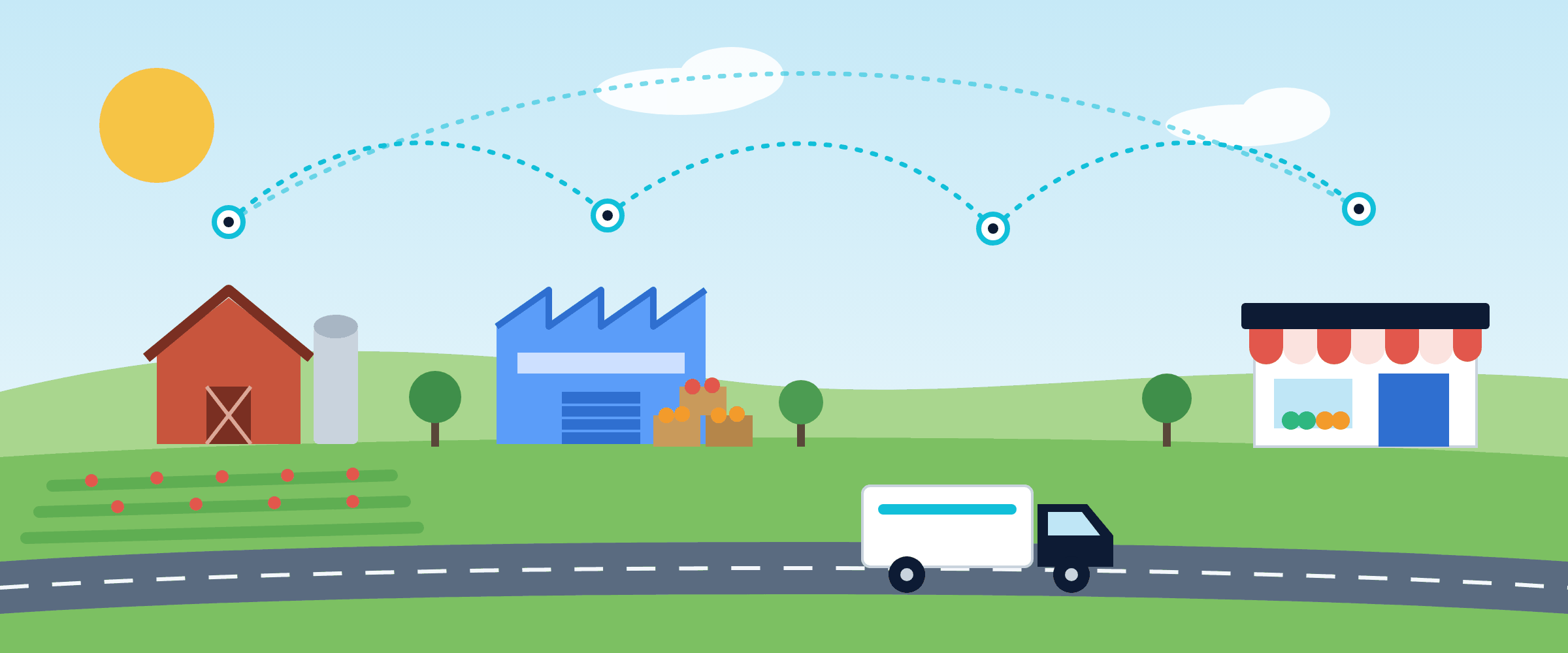
We tend to think of agriculture as a chain. Farmers grow food, processors prepare it, distributors move it and retailers sell it. Each business tries to do its job well. But that does not mean the whole system works well.
A farmer can produce a magnificent harvest and still lose money because the market is oversupplied. A retailer can run short of one product while throwing another away. A late delivery of fertiliser can disrupt an entire planting cycle. These are often failures of coordination, not effort.
So here is the question I think we should be asking:
How do we produce what people are likely to eat, where and when they need it, while using the least possible water, land, fertiliser, energy and transport per kilogram actually eaten?
That last part matters. A kilogram harvested but never eaten has consumed resources without feeding anyone. Yield per hectare is important, but it is not the whole measure of success.
Make agriculture a learning system
Instead of information moving only from farmer to consumer, imagine it flowing back as well:
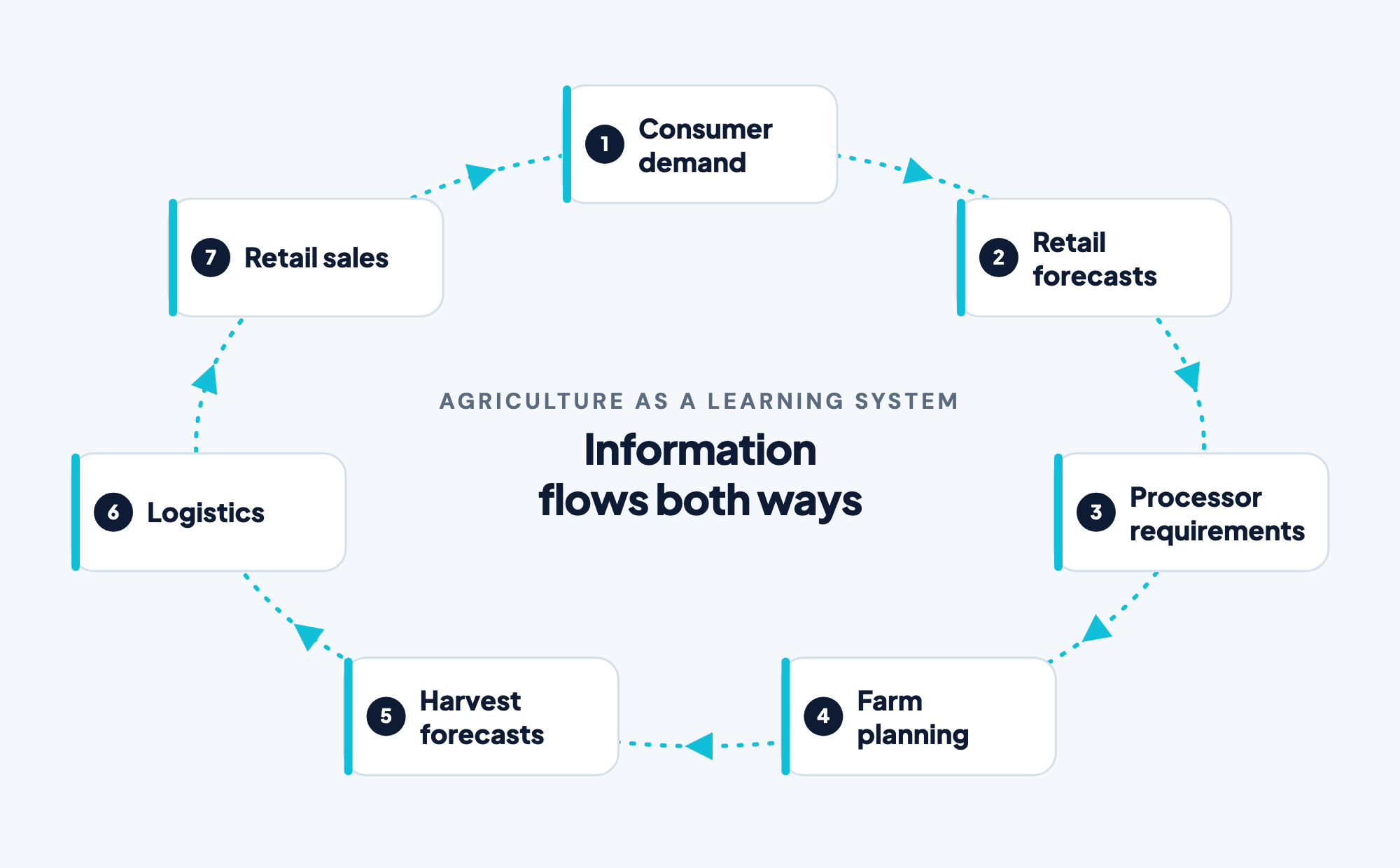
Retailers know what people buy, where they buy it and what gets wasted. Shared responsibly, that information can help growers and suppliers make better decisions about quantities, varieties, grades and delivery dates. Farmers can then share their own capacity, constraints and likely harvests.
Neither side can promise certainty. Weather, disease and changing demand will always surprise us. The point is not perfect prediction. It is fewer avoidable surprises and better decisions made together.
Use technology where it makes a difference
Satellite images, soil sensors, weather data, drones and agricultural AI can help farmers decide where water, fertiliser and crop protection are actually needed. Crop models and field observations can also give buyers earlier estimates of harvest volumes, timing and quality.
An imperfect forecast shared early can be far more useful than accurate information that arrives too late. It gives processors, transporters and retailers time to adjust.
The same applies after harvest. Better information about supply, demand, storage and cold-chain capacity can help move produce to the most useful destination before it loses value. We should be asking where each kilogram of food can do the most good, rather than accepting waste as inevitable.
Where M2North fits
M2North is not a precision-farming company, and we do not need to pretend to be one. Our strength is connecting businesses and making their commercial transactions work reliably.
Through EDI, supplier portals, digital ordering and transaction automation, we help buyers and suppliers exchange orders, confirmations, delivery information and invoices without the delays and errors that come with disconnected emails, spreadsheets and manual processes.
Think of a retailer buying fresh produce from many suppliers, or a farmer ordering seed, fertiliser and packaging. When the commercial information is accurate and available on time, people spend less effort fixing mistakes and more effort running their businesses.
Those connections also create a foundation for better procurement visibility, stronger supplier relationships and, over time, more useful information about commercial performance and supply-chain risk. Specialist technology providers can contribute agricultural forecasting and production intelligence. M2North can help connect the commercial side of that wider community.
Trust is what makes the network work
Businesses will not share valuable information simply because technology makes it possible. They need to know what is shared, who can use it and how they benefit. Buyers must offer realistic forecasts and commitments. Suppliers must be open about capacity and constraints. The relationship has to work both ways.
A connected community should not become another way for powerful businesses to push costs and risks onto smaller ones. Its value lies in helping participants succeed together.
A better measure of success
The ambition is straightforward: more food eaten, less food wasted, better returns for farmers and suppliers, more dependable supply for retailers and more responsible use of our resources.
Connecting more businesses is not, by itself, the achievement. Helping those businesses make better decisions together is.
M2North: Connecting businesses. Building trust. Powering prosperity.
The Adaptive Farm
Nov 4, 2026
Carlos Faria
Strategist
Supply Chain
How better decisions, smarter technology and trusted relationships can strengthen South African agriculture: manage the farm as one connected economic system, improve what already exists, and invest where there is a clear return.
The Hidden Toll of Slow Transactions
Aug 10, 2025
Carlos Faria
Strategist
Supply Chain
In today's fast-paced world, customers expect instant gratification. Slow confirmations and delayed processing create friction that costs revenue.
How Suppliers Receive Shoprite Checkers Purchase Orders Electronically
Oct 6, 2026
Ivan Jenkins
Co-Founder
Supply Chain
Shoprite Checkers has sent purchase orders to its suppliers through M2North since 2004. Here is how a supplier receives them, sends delivery notes and invoices back, and which systems it can use.
Book a demo
See how M2North turns these ideas into practical workflows.