The Adaptive Farm
Nov 4, 2026
Carlos Faria
Strategist
Supply Chain
How better decisions, smarter technology and trusted relationships can strengthen South African agriculture: manage the farm as one connected economic system, improve what already exists, and invest where there is a clear return.
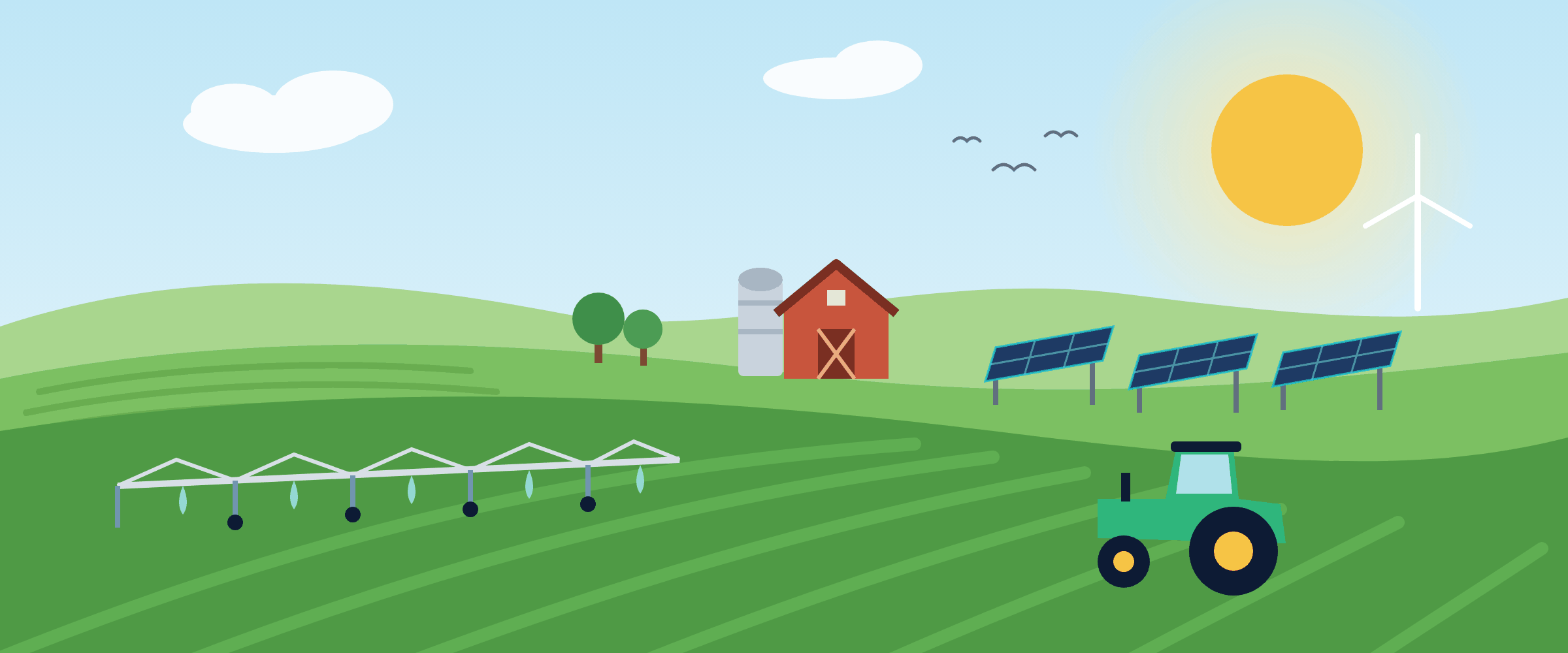
Farming has always involved uncertainty. Weather changes, input costs rise, machinery breaks down and deliveries arrive late. Now we also have extraordinary new technologies promising to solve almost everything. The challenge is to separate what is useful from what is merely exciting.
At M2North, we believe the opportunity is to manage the farm as one connected economic system: understand where the money goes, improve what already exists, and invest where there is a clear return.
1. Look at the whole farm
Electricity powers irrigation and refrigeration. Vehicles and tractors consume fuel and need maintenance. Inventory ties up cash. Late deliveries can disrupt planting or harvesting. None of these decisions stands alone.
A bigger solar installation, for example, may be a poor investment if the farm cannot use the extra electricity. Cutting fertiliser stock might release cash but create an expensive shortage at the wrong time. We should optimise the whole operation, not chase savings in isolation.
2. Start with information that matters
An electricity bill tells you what you spent, not when you used the power. Diesel consumption means little without productive hours, hectares worked, repairs and downtime. The same applies to inventory: what do you need, when do you need it, and how reliable is the supplier?
The starting point is not a dashboard full of numbers. It is a decision that needs improving. Measure what matters, make sure the information is dependable, and use it to act.
3. Use AI as a tool, not an oracle
AI could help plan irrigation around solar generation, spot unusual energy use, anticipate maintenance, forecast stock requirements and compare investment options. That is exciting.
But poor data produces poor advice. Weather changes, markets move and yesterday's patterns may not hold tomorrow. AI should make the farmer better informed, not replace the farmer's experience and judgment.
4. A practical five-stage approach
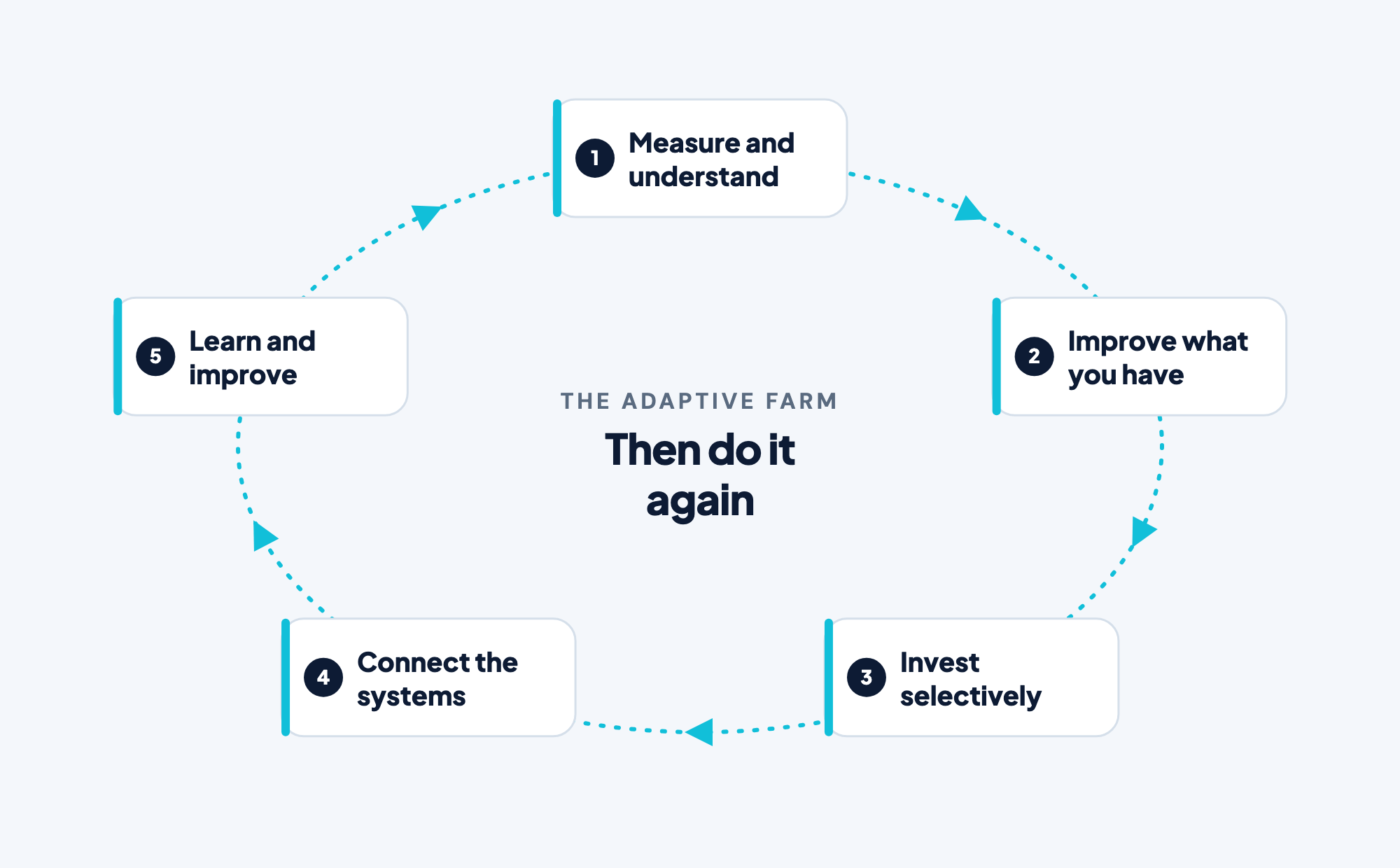
- Measure and understand: establish the real costs and performance of energy, machinery, stock, logistics and procurement.
- Improve what you have: remove waste through better scheduling, maintenance, purchasing and coordination.
- Invest selectively: test solar, batteries, electric vehicles and automation against lifetime cost and operational value.
- Connect the systems: link relevant farm information with procurement, suppliers, inventory and finance.
- Learn and improve: use analytics and AI where useful, measure the results and adjust.
This is not a fixed timetable. Different farms will move at different speeds. The economics should determine the sequence.
5. Make energy investments earn their keep
Solar can be particularly attractive where irrigation, refrigeration or processing uses power during the day. Batteries can provide backup and shift energy use, but they are expensive. Saving money, improving reliability and going completely off-grid are three different objectives.
A sensible grid-connected system may deliver a better return than full independence. Measure the demand, the risk of outages and the total lifetime cost before deciding. Energy independence is an economic choice, not an ideology.
6. Judge vehicles and machinery by productive work
Electric farm vehicles may make sense on predictable routes with reliable charging. Smaller electric tractors could suit some orchards and vineyards. Heavy fieldwork during short planting and harvesting windows is a different matter.
Compare the full cost per kilometre, operating hour or hectare: purchase, financing, energy, maintenance, payload, towing, downtime and resale value. Keeping a dependable diesel tractor may still be the best decision. There is no prize for replacing equipment before it makes economic sense.
7. Fix logistics and stock before spending a fortune
Consolidated deliveries, better route planning and more coordinated purchasing can save money without buying another vehicle. Inventory deserves the same attention. Seed, chemicals, packaging and spares have different lead times and different consequences when they run out.
The goal is not the smallest possible stockholding. It is having the right stock available when it matters, at a sensible total cost.
8. Good farming depends on good commercial relationships
A cheap supplier who delivers late or sends incorrect invoices may be expensive in practice. A buyer who changes orders repeatedly or pays late also creates costs. Trust works both ways.
That is why reliable orders, deliveries, invoices, communication and payments matter. Better digital connections make those relationships easier to manage. Over time, credible performance information could help businesses recognise reliable partners. Trust, however, is earned by behaviour, not awarded by software.
9. Where M2North fits
We do not build tractors, install solar panels or pretend to know more about farming than farmers do. Our job is to make the commercial side of agriculture work better.
Through EDI, supplier portals, digital orders and transaction automation, M2North helps buyers and suppliers exchange accurate information, reduce manual work and improve visibility. This can support purchasing, inventory coordination, onboarding and customer service.
The Trust Network is an opportunity to build on that foundation. As reliable information grows, we can explore better performance insights and, eventually, carefully governed AI-supported decisions. Those are development opportunities, not capabilities that are already fully in place. Farm-level optimisation will also require specialised operational data and partners.
10. A farm that keeps learning
The most interesting farm is not the one covered in sensors. It is the one that understands its costs, learns from mistakes and gets better at using land, water, energy, equipment, capital and people.
Measure. Understand. Improve. Invest. Evaluate. Learn. Then do it again. For us at M2North, that is what the Adaptive Farm is really about: good stewardship. Technology should help people make better decisions, use resources responsibly and build businesses that can prosper through uncertainty.
Our own contribution is straightforward: connect businesses, make transactions more reliable and help turn commercial information into practical value.
The future of agriculture is not technology for its own sake. It is better farming.
Agriculture as a Connected Community
Nov 4, 2026
Carlos Faria
Strategist
Supply Chain
The problem in agriculture is not always production. Many losses are failures of coordination, not effort. What changes when information flows back from consumers to farmers, and businesses make better decisions together?
How Will AI Transform Your Supply Chain in the Years Ahead?
Aug 23, 2025
Carlos Faria
Strategist
Supply Chain
EDI automated the documents that were already digital. AI is automating the rest: the PDFs, scans and emailed orders that still get retyped. Here is what that looks like on a network moving more than a million documents a month.
The Two Supplier Economies: 10% of Suppliers, 80% of Spend
Oct 9, 2026
Carlos Faria
Strategist
Newsletter
The Trust Index for September 2026: 1,531,915 documents exchanged across the network, 45,299 pages processed by our AI with 85%+ going straight through, and what our network data shows about the two supplier economies in mining and industrial procurement.
Book a demo
See how M2North turns these ideas into practical workflows.